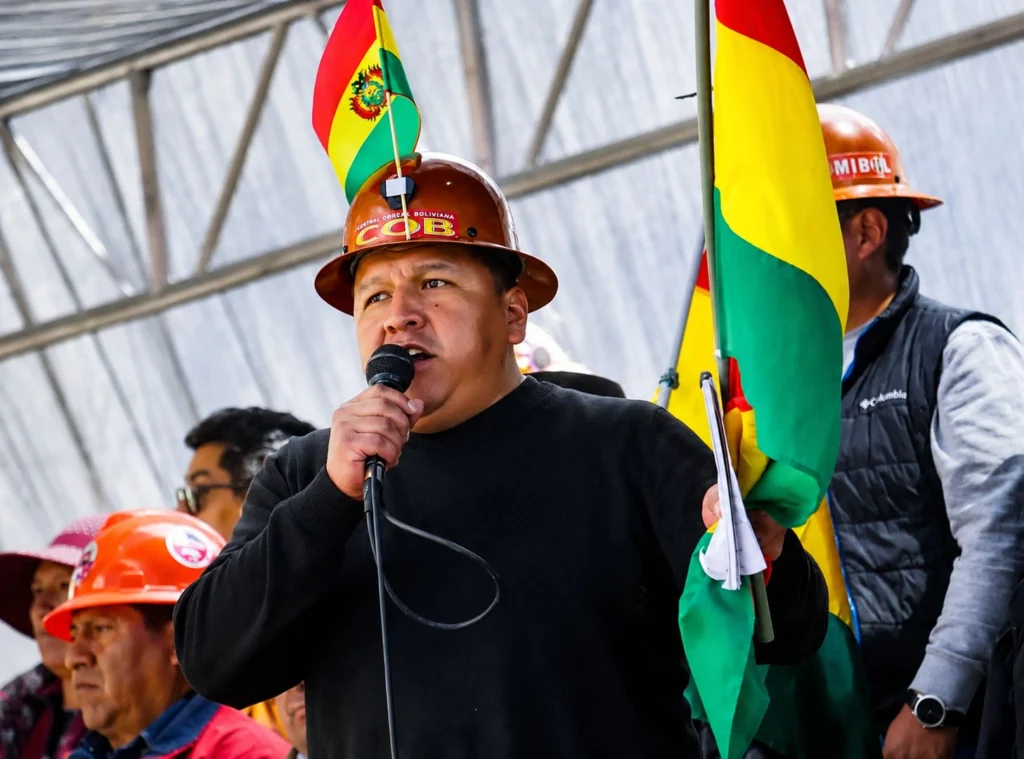



May Day Symbolizes the Working Class Resistance
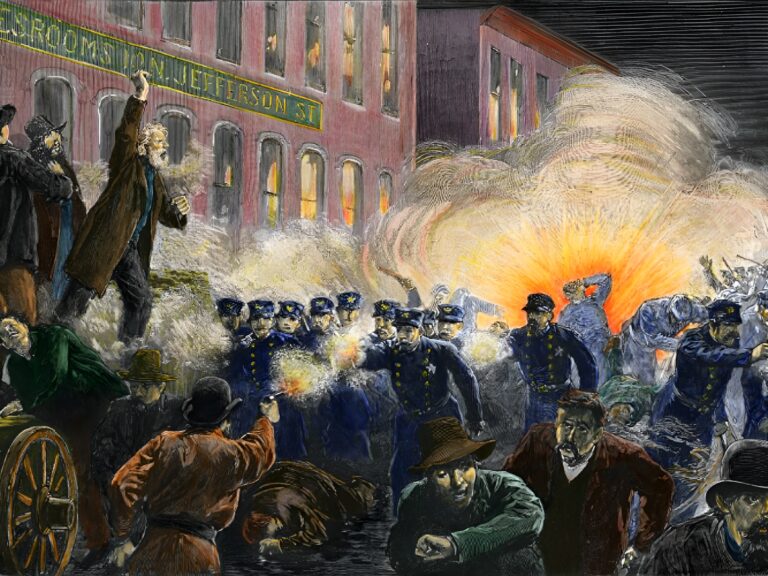
Paint “The Haymarket Riot”, by Thure de Thulstrup
May 1, 2026 Hour: 2:13 pm
🔗 Comparte este artículo
Chicago workers’ strike for the 8-hour day became a global fight for economic justice.
May 1st is International Workers’ Day, also known as Labor Day, and is celebrated in over 80 countries. While it is commonly perceived as a simple day off from work, its origins are rooted in the industrial era of the late 19th century.
RELATED:
Kenya Announces Minimum Wage Increase for May Day
This day is observed as a global commemoration of the struggles and achievements of the labor movement. In contrast to numerous other holidays that commemorate particular national occurrences, May 1st possesses a distinctive quality due to its representation of a transnational working-class identity.
The date was chosen to honor the efforts of labor unions and activists who fought for fundamental rights often taken for granted today, such as the eight-hour workday and safer working conditions.
The transition from a local protest in the United States to a worldwide event involved a complex mix of political organizing, migration, and the spread of information through international networks. To understand the significance of this day, it is essential to examine a pivotal moment in Chicago that permanently altered the course of labor history.
The Emergence of May 1st: The Haymarket Martyrs
The specific origin of May 1st is tied to the events of 1886 in Chicago, Illinois. During this period, the Industrial Revolution was at its peak, and factory workers often endured shifts lasting between 12 and 16 hours in dangerous conditions.
The Federation of Organized Trades and Labor Unions in the United States decided to take a stand, declaring that from May 1, 1886, eight hours should constitute a legal day’s work. When employers refused to meet these demands, a general strike of nationwide significance began, with Chicago becoming the epicenter of the movement.
On May 3, 1886, there was an outbreak of violence outside the McCormick Harvesting Machine Company plant, involving a clash between police and strikers, which resulted in the deaths of several workers.
In response to this police brutality, labor activists called for a peaceful mass meeting the following evening at Haymarket Square. As the meeting was drawing to a close and law enforcement officials moved in to disperse the crowd, an unidentified individual threw a dynamite bomb into the police ranks.
In the aftermath of the Haymarket Riot, the authorities launched a crackdown on the labor movement, particularly targeting anarchist and socialist leaders. Eight men were arrested and tried for conspiracy, despite a lack of evidence linking them to the bomb itself.
The trial was the subject of significant criticism from labor groups, who described it as a “state crime” intended to silence activists. Eventually, four of the men – George Engel, Adolf Fischer, Albert Parsons, and August Spies – were executed by hanging in 1887.
Another, Louis Lingg, took his own life in prison. The men were known worldwide as the “Haymarket Martyrs”, and their sacrifice led to May 1st becoming a permanent symbol of the fight for workers’ rights.
The Global Spread: From Chicago to the World
The transformation of a local American tragedy into an international event was largely due to the efforts of the Second International, a global organization of socialist and labor parties.
At the inaugural congress of the organization, held in Paris in 1889, a resolution was passed which called for a significant international demonstration to be held on a designated date.
The decision to observe May 1st as a day of commemoration for the Haymarket Martyrs, and to advocate for a reduction in the workday to eight hours was made. By 1890, the first international May Day was observed across Europe and the Americas, demonstrating the labor movement’s successful establishment of a network that transcended national borders.
Several factors contributed to the accelerated spread of this commemoration. The labor press played a vital role in disseminating information about the events in Chicago, with newspapers and pamphlets translating the story into dozens of languages.
Additionally, the mass migration of workers during this era served as a human bridge. Militants and organizers moving between Europe and Latin America carried organizational strategies and ideological frameworks with them. The 1st of May has evolved into a globally recognized day of action, uniting workers across the globe in a shared sense of purpose.
The American Exception: Why the U.S. Celebrates in September
Despite its status as the birthplace of the Haymarket events, the United States does not officially recognize May 1st as Labor Day. Instead, Americans celebrate Labor Day on the first Monday in September.
This distinction was a deliberate political move by the U.S. government and more conservative labor leaders in the late 19th century. In 1894, President Grover Cleveland signed the bill establishing Labor Day as a federal holiday in September, specifically choosing a date that did not coincide with the anniversary of the Chicago riots.
The primary objective of establishing a September holiday was to differentiate the American labor movement from the more radical elements of socialism and anarchism associated with May 1st.
The Role of Working Women: Double Invisibility and Convergence
Throughout history, the contributions of women workers have frequently been overshadowed by the image of the male industrial worker. However, women played a pivotal role in the labor movement, particularly in the textile, garment, and tobacco industries, where they confronted even lower wages and more challenging conditions compared to their male counterparts.
This “double invisibility” meant that women had to fight not only against corporate exploitation but also for recognition within their own unions, which were frequently male-dominated.
A key figure in the origins of May 1st was Lucy Parsons, the widow of one of the executed Haymarket martyrs. As a woman of color and a radical activist, she became a prominent leader in her own right, famously stating that women were the “slaves of slaves.”
As time passed, the specific demands of women, such as maternity leave, equal pay, and the end of workplace harassment, began to merge with the broader labor movement. This led to a historical convergence between the May 1st labor protests and the March 8th International Women’s Day, as both dates highlight that the fight for economic justice is inseparable from the fight for gender equality.
Labor Day in Latin America: Regional Adoption and Modern Realities
Latin America was among the first regions to adopt May 1st as a day of labor commemoration. In 1890, just one year after the Paris resolution, workers in Cuba and Argentina organized some of the first mass demonstrations in the Western Hemisphere.
The dissemination of these concepts was significantly accelerated by the influx of immigrants from Spain, Italy and Germany, who introduced anarchist and socialist ideologies to the emerging urban centers of the Americas. In Mexico, the date became a significant platform for social justice during the 1913 revolution, linking labor rights to land reform and national sovereignty.
Today, May 1st, is an official holiday and a significant day of mobilization in nearly every Latin American country, from Mexico to Chile.
However, the nature of the commemoration varies; while some groups use the day for political protest against neoliberal policies, others have used it to expand the definition of work.
For instance, in Brazil, while May 1st remains the national Labor Day, there are legislative milestones for the recognition of domestic workers, a group that has historically been excluded from labor protections. This is indicative of a regional trend where the concept of the “worker” is undergoing constant evolution to encompass informal workers, domestic staff, and rural laborers.
A Legacy of Resilience and Reform
From its origins as a violent clash in Chicago to its current status as a global day of solidarity, May 1st remains a pivotal date in the history of civil rights. It is important to acknowledge that the standard eight-hour workday and basic safety regulations were not simply gifts from employers, but rather the hard-won results of international organization and sacrifice.
May 1st is not just a relic of the past when we consider the origins of the Haymarket martyrs, the role of pioneering women, and the deep-rooted traditions of the movement in Latin America. It continues to be a living platform for addressing the challenges of the modern global workforce.
Sources: La Izquierda Diario – Telesur – Eric Hobsbawm Essays – Jacobin Magazine – Cedinci – Revista Furias – Angela Davis – Brasil de Fato – CLACSO
Author: Silvana Solano
Source: teleSUR